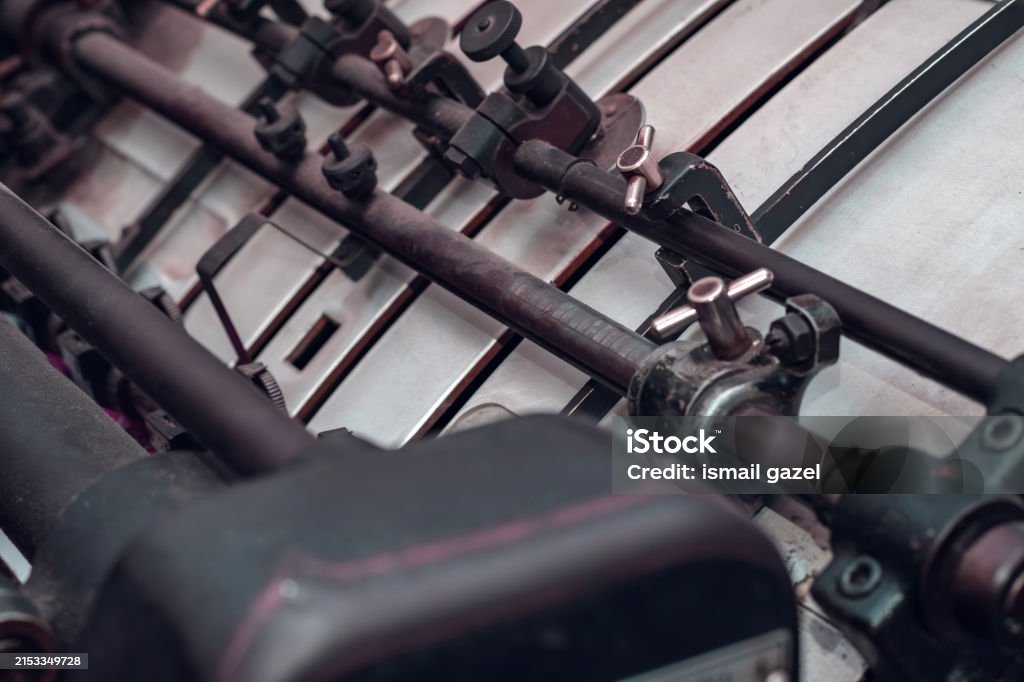
Cylinder presses are widely regarded as one of the most reliable and consistent forms of printmaking equipment. Their design allows for even pressure distribution, making them particularly well suited to letterpress, proofing, and edition printing.
Unlike platen presses, which apply pressure between two flat surfaces, cylinder presses use a rolling cylinder that passes over a flat bed. As the cylinder moves, it applies controlled pressure across the entire print area. This rolling action helps ensure a uniform impression, even on larger formats.
The accuracy of a cylinder press depends heavily on alignment. The cylinder must be precisely positioned relative to the bed to ensure even contact. Any misalignment can result in uneven printing, slurring, or inconsistent ink transfer.
Rollers also play a crucial role. They are responsible for distributing ink evenly across the printing surface. Over time, rollers can wear down or harden, which affects their ability to transfer ink effectively. Regular inspection and replacement are essential to maintain print quality.
Another important component is the carriage system, which guides the bed through the press. This system must move smoothly and consistently. Any obstruction, debris, or wear in the tracks can cause irregular movement and affect the final print.
Maintenance of cylinder presses typically includes cleaning, lubrication, and periodic adjustment of key components. Regular servicing ensures that small issues are identified early and prevents more significant mechanical problems.
Understanding how cylinder presses operate helps printmakers maintain their equipment more effectively and achieve consistent, high-quality results.
