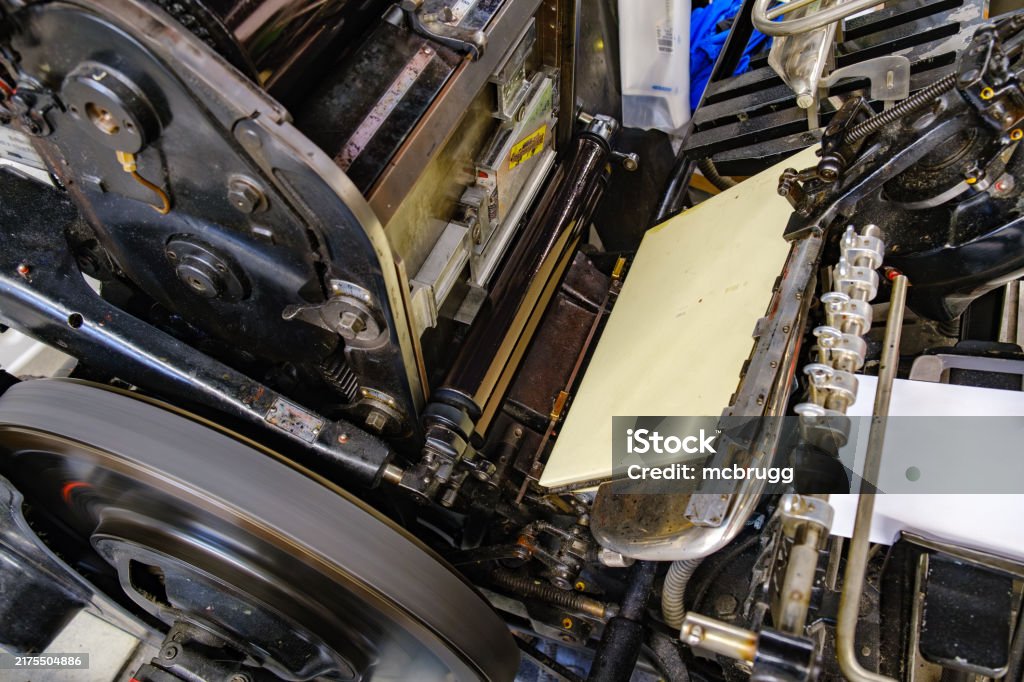
Restoring a letterpress is a detailed and highly specialised process that requires both engineering expertise and an understanding of traditional printmaking techniques. Whether you are working with an Albion hand press or a Heidelberg platen, restoration ensures your equipment performs reliably and safely.
The process typically begins with a full assessment of the press. This includes checking for structural integrity, wear in moving parts, and any previous modifications or damage. Many older presses have been in continuous use for decades, and issues such as worn bearings, uneven platens, or degraded rollers are common.
Once assessed, the press is usually stripped down into its core components. This allows for thorough cleaning, removal of corrosion, and inspection of internal mechanisms. Parts that are beyond repair may need to be remanufactured or replaced, often requiring specialist machining.
One of the most critical aspects of restoration is alignment. Even slight inconsistencies in platen or cylinder positioning can lead to uneven printing pressure and poor results. Careful calibration ensures the press delivers consistent impressions across the entire print area.
Rollers are another key component. Over time, they harden or wear unevenly, affecting ink distribution. Re-covering or replacing rollers is often essential to achieving high-quality prints.
Finally, the press is reassembled, tested, and adjusted under working conditions. This ensures it operates smoothly and safely before returning to regular use.
A well-restored press not only improves print quality but also extends the life of the equipment, making restoration a valuable investment for any printmaker.
